Road Safety and Defensive Driving Tips Every Company Should Know
Every business that puts people on the road carries a responsibility for their safety. Defensive driving is the discipline that protects them — a mindset of anticipating danger early and leaving yourself room to respond. Here are the fundamentals that matter most.
Keep a safe following distance
If you take away one habit, make it this one. Tailgating removes your time to react. The simple three-second rule — staying at least three seconds behind the vehicle ahead — gives you space to brake safely, and you should double it in rain or heavy traffic.
Scan ahead, not just in front
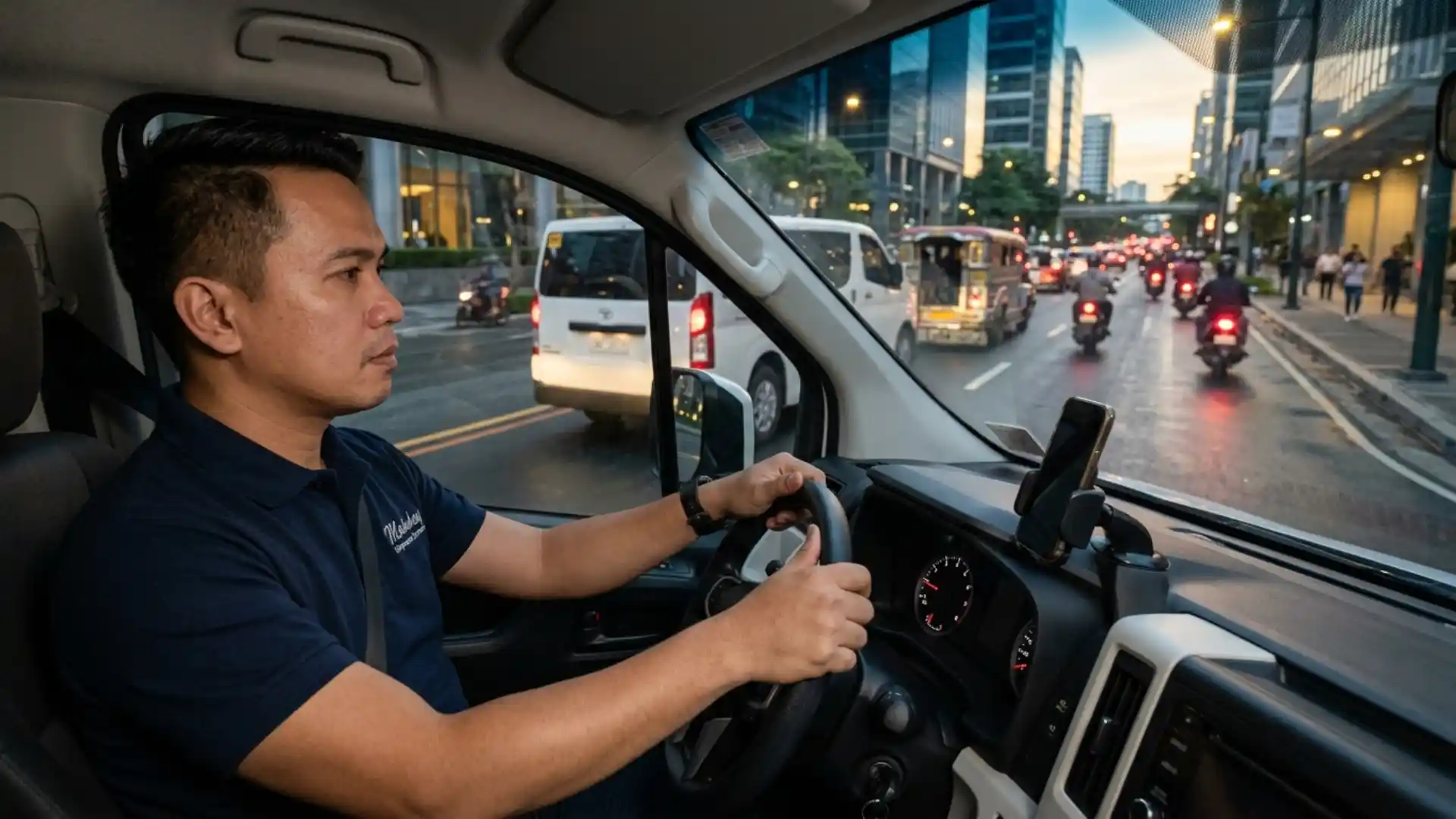
Good drivers look far down the road, not at the bumper in front of them. Scanning 10 to 15 seconds ahead lets you spot a stopped jeepney, a merging motorcycle, or a pedestrian before it becomes an emergency. Check your mirrors every few seconds so you always know what’s around you.
Eliminate distractions
A glance at a phone at 60 km/h means driving the length of a basketball court blind. Phones, eating, and even an intense conversation pull attention from the road. For professional drivers, a no-phone-while-driving rule is non-negotiable — and it should be for your team too.
Respect fatigue
Tired driving impairs reaction time as much as alcohol. On long provincial trips, scheduled breaks and rested drivers aren’t a nicety — they’re a safety control. This is one reason companies turn to professional transport: drivers are managed for hours and rest, not pushed past safe limits.
Match speed to conditions
The speed limit is a maximum, not a target. Rain, fog, night driving, and heavy traffic all call for slowing down. Adjusting to conditions is the mark of a driver in control rather than one simply keeping up.
Not sure which model fits your business?
MRLC Transport Cars, Inc. has provided corporate car rental, shuttle, and fleet management services to the Philippines' leading companies since 1994. Our team shares practical insights to help businesses move smarter.